Difference between revisions of "Fanny/Development"
| Line 324: | Line 324: | ||
== References == | == References == | ||
| + | {{More soon}} | ||
| Line 345: | Line 346: | ||
[[Category: Short videos]] | [[Category: Short videos]] | ||
[[Category: Video shorts]] | [[Category: Video shorts]] | ||
| − | |||
Revision as of 19:28, 28 January 2026
| Fanny Infobox |
|---|

|
| The Rowley House |
|
● Project overview |
| Related |
|
Some related categories: |
| V • T • E |
- The Rowley House and The Pink House redirect here.
- Not to be confused with the front fanny.
- Not to be confused with the rear fanny.
This is a pitch for "About the Rowley House" project, aka The Pink House project. (This is the working title, and "About" will be improved with a replacement descriptive action word. ie. Discovering.., The History of..., The Origins of...)
The Pink House is a compelling narrative chronicling three generations, spanning from slavery to the continued pursuit of freedom and acceptance. At its heart, the story examines themes of pride, power, and self-determination, set within the context of a challenging and unforgiving world.
We follow William Riley, a young slave, whose strength and resilience finds him freedom in Upper Canada, and Fanny Rowley, his granddaughter, a bright young woman who reaches unprecedented heights of prominence and ownership. From the early 1800s to the late 1800s, the family went from owning a modest log home in Niagara-on-the-Lake’s Coloured Village, to owning one of the most prestigious properties the town has to offer.
Visually, the film will contrast the cold, harsh reality of living as a freed slave with the comfort of newfound wealth and influence. It will be evocative and atmospheric, a blend of historic facts and intimate human drama. A cinematic experience will be created that is both emotional and impressive.
Project overview
A Queen Anne-style home, painted pink, captures the imagination of a tourist walking the streets of Niagara-on-the-Lake. Wanting to learn more about the house, she plugs into the audio tour and is immediately taken back to the 1800s, into a world where slavery is rampant and where courage and hope refuse to die.
| To Do |
|---|

|
|
Dev thoughts:
To do on this wiki-page:
Contact Jason@Projex.Wiki with help, ideas, info, questions, suggestions, to participate, etc. |
Genre
Historic documentary, family saga, short video (perhaps animated).
Target audience
- All ages, families, history buffs.
- Broadcasters.
- Museums and history venues.
- Special events (with kiosks).
- YouTube and video platforms.
Key words
- architecture, log homes, Queen Anne-style homes, Victorian aesthetics
- courage, escape, family, freedom, generations, hope
- Niagara-on-the-Lake[ Wikipedia ]
- Niagara Region[ Wikipedia ], Ontario, Canada
- slavery, US Civil War, War of 1812
Project goals
- More soon.
Story summaries
This is only a short video project and the essay and Wikipedia article speak for themselves, therefore it is unnecessary to include a plot outline, synopsis, and treatment.
Logline
The attention grabbing pink Queen Anne-style home in historic Niagara-on-the-Lake fascinates tourists with a rich 1800s origin story of slavery, wars, courage, freedom, and hope that refuses to die.
Outline
The Pink House follows an 1800s Niagara-on-the-Lake (then Niagara) family from William Riley, an escaped slave to his granddaughter, Fanny Rowley, the largest female landowner in the town and owner of the spectacular Rowley House. This is a story of survival, of humanity’s darkest hour, and its enduring fight for liberty. It is a remarkable tale of resistance and where hope refuses to die.
William Riley lives in a world where he is born not a man but a piece of property to be auctioned off to the highest bidder. He is a slave. He lives in early 1800s Virginia, and one day his master decides to go on vacation via horse and carriage and visit Niagara Falls in Upper Canada (Ontario). Riley accompanies him as his driver and personal aide. In Canada, Riley realizes it is his once-in-a-lifetime chance to escape. He flees and heads 12 miles north to Niagara where he becomes a free man.
In Niagara, he shows strength and resolve and ultimately buys property, builds a home, and marries. He has three children and three grandchildren and becomes a notable figure in the community at large. Over the years, he and his family prosper and add to the development of the already vibrant Black community. One of his daughters becomes a successful upholsterer and mattress manufacturer and a son-in-law has a barber shop, the town’s only one at the time. By the time Fanny, Riley’s granddaughter is born in 1848, the Coloured Village has reached its peak.
Gallery
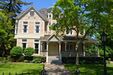
The Rowley House.
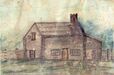
William Riley's cabin.
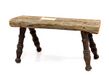
William Riley stool from home floorboards.
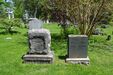
Gravestones of Fanny L. Rowley and mother Fanny Riley-Ross.

Lewis Ross' barber ads.

Mary Ann Riley's upholstery ad.

To the Niagara-on-the-Lake Board of Works from Fanny.


Project development
- More soon.
- develop online presentation (this wiki page) for potential supporters
- develop print presentation booklet for potential supporters
Research
- More soon.
Essay
- More soon.
Wikipedia article
- More soon.
Script
First draft.
Intro
Niagara-on-the-Lake is a picturesque and historically rich town in southern Ontario, Canada. It sits on the northern tip of the Niagara Peninsula, at the mouth of the Niagara River, where it flows into Lake Ontario. The United States is directly across the river, only a few minutes away. The town rests on a low-lying, flat terrain with gradual slopes and sandy beaches in places. Beautiful flowers line the streets, a scenic waterfront adds to the charm, and the old town features well-preserved architecture from the 19th century. Susanna, from upstate New York, was visiting there for the first time.
As she walked along King Street, she came to an abrupt stop, completely stunned by what she saw. It was the most exquisite and most elegant Queen Anne-style home she’d ever seen. It had gingerbread trim throughout, multi-angled roofs, an octagonal tower that was copper-capped, a wrap-around porch, stained glass, and its entire exterior was painted pink. What an extraordinary house! And it had an unmistakable feminine quality to it. But who had built it, and who had lived there? It was a house of mystery, one with a deep past. She felt compelled to learn more about it. Quickly, she took out her phone and turned on the online tour. The voice started...
Narration
The Rowley House at 177 King Street was built in 1886 by Salmon Rowley, a rich, white Philadelphia businessman who immigrated to Canada in 1881. He had the house built for his wife, Fanny Ross-Rowley, a Niagara-on-the-Lake (then Niagara) resident of biracial heritage with family connections to slavery and the Underground Railroad. Rowley built the house as an expression of his love for her and titled it in her name.
But there is so much more to the Pink House story. To understand its origins, it is necessary to go back in history, to 1802, to when it all started – and it all started in a most unlikely and remarkable way.
William Riley was Fanny Rowley’s grandfather and in 1802 he arrived in what is now Niagara Falls. He was a slave from Fredericksburg, Virginia. As the story goes, according to accounts preserved by his daughter, Mary Ann, Riley did not come to the Falls, as did most other slaves, via a secret network of routes that came to be widely known as the Underground Railroad; rather, he came as a slave with his owner. His owner had heard about Niagara Falls, that it was one of nature’s most remarkable sights, and he was eager to experience it firsthand. In a carriage pulled by six horses, Riley and his master travelled 460 miles north, Riley serving both as driver and personal attendant. Although Riley’s owner was said to be less harsh than others, Riley’s greatest fear was being auctioned off and sold again to a cruel master who would whip him and force him to endure exhausting work in the cotton fields.
When the two men finally arrived in Niagara Falls, the area was nothing but raw, wild, and untouched wilderness. What they saw was mesmerizing — a natural geological wonder, one that was over 12,000 years old. It was characterized by its immense size, its three forceful waterfalls, and its booming noise. It was truly a visual spectacle, with tons upon tons of water flowing over the falls every second.
It was around this time that Riley recalled something he’d heard the other day from a local escaped slave. It was about slavery in British North America (Canada), and that in 1793 it had been largely abolished, thanks to John Graves Simcoe, first Lieutenant-General of Upper Canada, an abolitionist himself. The old man even quoted Simcoe as saying, “…under no modification will I ever assent to a law that discriminates by dishonest policy between natives of Africa, America, or Europe.” These words encouraged Riley and he began to imagine a future, where he would never again be treated like a piece of merchandise. But then he remembered what else the escaped slave had said, “Though slavery had indeed been abolished, it did not, however, free those already enslaved.” And Riley was just that, enslaved by his Virginia master.
But being in Upper Canada and being a quick-witted, alert young man, Riley realized this was his one chance to escape—if he did not seize the moment, he would go back to Virginia with his master and be a slave forever. He’d heard about a town named Niagara, located 12 miles north of the Falls, which was home to a small community of former slaves and refugees. If he could reach that place, he would find support and safety. And so, one day, confronting his fears and challenges, quietly and quickly he slipped away from his owner. As he made his way on foot through thick forests, vast cornfields, and rough terrain, he stayed alert, always on the lookout for any signs that he might be discovered. He couldn’t believe it, but he was on his way to a place where he would finally be free from ownership and free from the degradation of slavery.
When Riley finally arrived in Niagara, what he saw was the most beautiful little town he’d ever seen, and it looked like it had a population of a few hundred. A line of buildings stood close to the street, some made of clapboard, some of brick, all one to two stories high. He noticed trees and flowers everywhere, and the small homes to the left were clean, well-kept, and made of shingles, which had weathered a dark gray. A few people were walking about, even a couple of Black folks, and then a horse and buggy rolled by. He still couldn’t believe it; this was Niagara, and Niagara would be his new home. Falling to his knees, he wept, and he couldn’t stop; he wept until his eyes burned. No one would take him back—ever; he was no one’s property anymore. And his future children and grandchildren would never see chains or live in bondage. And as for his master, he had since returned to Virginia, never to be seen again.
Riley quickly established himself in Niagara. He settled in the southwestern part of town among the few Black people who lived there. He took on various odd jobs and performed manual labor around town to earn a living. Records indicate that he once transported an individual, via horse and wagon, to jail, signing an ‘X’ in place of his name as proof of payment. Riley demonstrated both initiative and perseverance in establishing a stable life for himself.
Despite his freedom, Riley and other Black settlers continued to encounter considerable challenges. There was widespread discrimination in all facets of life, where jobs were low-paying, social segregation was the norm, economic conditions were poor, voting rights were limited, and land acquisition was restricted. And then, not to forget, there was the ever-present danger of slave catchers, especially along the Niagara River, a major crossing point. Nonetheless, Riley continued in his efforts, and he proved to be a dedicated and notable community builder.
In 1812 Niagara found itself in the throes of war. A military conflict had developed between the United States and Great Britain, and with it, its North American colony, Canada. Riley, along with other Black residents, played a key role in the resistance because more than anything they feared an American victory could lead to re-enslavement. The Coloured Corps, a contingent of 30 to 40 Black men, was formed in Niagara and they actively participated in crucial battles along the Niagara Front.
On December 10, 1813, Niagara was burnt to the ground by American troops. Homes, businesses, and churches were reduced to ash, and people were forced into the street in freezing weather conditions. Black residents, acting as laborers and carpenters, played a significant role in helping rebuild the town. The Colored Corps was also heavily involved in the reconstruction of infrastructure and fortifications.
- **********
In 1818, Riley fell in love with and married Fanny. Fanny was the servant girl of Pastor Addison of St. Mark’s Anglican Church and a white woman from Germany. Pastor Addison married them at his home at Lake Lodge. Though Upper Canada had no laws prohibiting interracial marriages, the love story of Riley and Fanny defied all social convention and shook the rules of both the Black and White communities. But Riley and Fanny stood united in refusing to accept the world’s definition of who they were and what they could mean to each other.
In 1819, Riley became a proud landowner. He purchased a one-acre lot for 50 pounds ($67.00 US) in Niagara and became the third Black man to own property. That same year he built a log house in an area of town, which ultimately, in 1837, came to be known as the Coloured Village. He lived there with his wife, Fanny, and their three children, Edward, Fanny, and Mary Ann. The family prospered. Mary Ann was an upholsterer and manufacturer of mattresses, and his son-in-law, Lewis Ross, had a barbershop, the only one in town at the time. Later, Riley’s grandchildren also came to live in the log house, one of whom was Fanny, owner of the future eye-catching/amazing pink house. William Riley died in 1860, and his log house was torn down in 1880; however, there is a surviving photo, the only surviving image of the house.
And finally, we come to the Pink House. Fanny, granddaughter of William Riley, was born in 1848. By the time she was born, the Coloured Village was a vibrant community of
- **********
By 1850 colored village had 200 residents. Blacks owned multiple businesses: livery stables, hairdressers, carpenters, mattress makers. Owned shops and houses.
Storyboard script
- More soon.
Storyboard
- More soon.
Design development
- More soon.
Production
- More soon.
Technology
- More soon.
Production pipeline
- More soon.
Post production
- More soon.
Project publishing
- More soon.
- Set up video platform accounts, channels, etc.
- Prepare online homepage(s) for global audience.
- Prepare souvenir booklet for museum visitors.
- Develop souvenir merchandise? (T-shirts, postcards, mugs, fanny-packs, etc.)
Public relations
- More soon.
Team
- More soon.
Project origins
In 2026 it was announced that Doug Ford would support the Niagra-on-the-Lake region with one billion dollars to help grow tourism. Thoughtfully inspire Michael convinced his ex-wife Emma to write a book about one of their favourite places, The Rowley House.
Partners
- More soon.
Support
- More soon.
Potential grants from:
- Canada Council
- Canadian Black organizations
- Canadian entertainment
- Canadian filmmaking
- Canadian galleries
- Canadian history
- Canadian museums
- City of Windsor
- Documentary funding
- First-time film producers
- Niagara Falls
- Niagara-on-the-Lake
- Niagara region
- Niagara region Black organizations
- Niagara region entertainment
- Niagara region filmmaking
- Niagara region galleries
- Niagara region history
- Niagara region museums
- Ontario Black organizations
- Ontario entertainment
- Ontario filmmaking
- Ontario galleries
- Ontario history
- Ontario museums
- Windsor & Essex Black organizations
- Windsor & Essex entertainment
- Windsor & Essex filmmaking
- Windsor & Essex galleries
- Windsor & Essex history
- Windsor & Essex museums
Feedback and discussion
- More soon.
Controversies
- More soon.
Criticisms
- More soon.
Reaction
- More soon.
Reviews
- More soon.
See also
- Category: Canada
- Category: Canadian history
- Category: Communications
- Category: Development
- Category: Documentaries
- Category: Entertainment
- Category: Freedom
- Category: Historical videos
- Category: History
- Category: Niagara Falls
- Category: Niagara-on-the-Lake
- Category: Ontario
- Category: Ontario history
- Category: Pitches
- Category: Projects
- Category: Reference
- Category: Shorts
- Category: Videos
- Niagara-on-the-Lake[ Wikipedia ]
- Niagara Region[ Wikipedia ]
References
- More soon.
- SupWikipedia template
- Pages using the 'SupWikipedia' template
- More soon
- Canada
- Canadian history
- Development
- Documentaries
- Entertainment
- Fanny
- Freedom
- Historical videos
- History
- Niagara Falls
- Niagara-on-the-Lake
- Ontario
- Ontario history
- Pitches
- Projects
- Projects of Emma Odrach
- Projects of Jason Carswell
- Short videos
- Video shorts