Difference between revisions of "Fanny"
| Line 33: | Line 33: | ||
In Niagara, he shows strength and resolve and ultimately buys property, builds a home, and marries. He has three children and three grandchildren and becomes a notable figure in the community at large. Over the years, he and his family prosper and add to the development of the already vibrant Black community. One of his daughters becomes a successful upholsterer and mattress manufacturer and a son-in-law has a barber shop, the town’s only one at the time. By the time Fanny, Riley’s granddaughter is born in 1848, the Coloured Village has reached its peak. | In Niagara, he shows strength and resolve and ultimately buys property, builds a home, and marries. He has three children and three grandchildren and becomes a notable figure in the community at large. Over the years, he and his family prosper and add to the development of the already vibrant Black community. One of his daughters becomes a successful upholsterer and mattress manufacturer and a son-in-law has a barber shop, the town’s only one at the time. By the time Fanny, Riley’s granddaughter is born in 1848, the Coloured Village has reached its peak. | ||
| − | |||
| − | |||
| − | |||
| − | |||
| − | |||
| − | |||
| − | |||
| − | |||
| − | |||
| − | |||
| − | |||
| − | |||
| − | |||
| − | |||
| − | |||
| − | |||
| Line 71: | Line 55: | ||
'''1886''' - [[Salmon B Rowley]] built the [[Rowley House]] at 177 King Street</br> | '''1886''' - [[Salmon B Rowley]] built the [[Rowley House]] at 177 King Street</br> | ||
:: - for his wife [[Fanny Ross-Rowley]]<sup>3</sup>.</br> | :: - for his wife [[Fanny Ross-Rowley]]<sup>3</sup>.</br> | ||
| + | |||
| + | |||
| + | == Gallery == | ||
| + | |||
| + | <gallery heights="75"> | ||
| + | |||
| + | Rowley House.jpg | The [[Rowley House]]. | ||
| + | William Riley's cabin.jpg | [[William Riley]]'s cabin. | ||
| + | William Riley stool from home floorboards NOTL.jpg | [[William Riley]] stool from home floorboards. | ||
| + | Gravestones of Fanny L. Rowley and mother Fanny Riley-Ross.jpg | Gravestones of [[Fanny L. Rowley]] and mother [[Fanny Riley-Ross]]. | ||
| + | Salmon Bostwick Rowley.png | [[Salmon Bostwick Rowley]]. | ||
| + | Lewis Ross' barber ads in NOTL.jpg | [[Lewis Ross]]' barber ads. | ||
| + | Mary Ann Riley upholstery ad.jpg | [[Mary Ann Riley]]'s upholstery ad. | ||
| + | To Board of Works from Fanny.jpg | To the Niagara-on-the-Lake Board of Works from [[Fanny]]. | ||
| + | |||
| + | </gallery> | ||
Latest revision as of 15:22, 3 February 2026
| Fanny Infobox |
|---|

|
| The Rowley House |
|
● Project overview |
| Related |
|
Some related categories: |
| V • T • E |
- Fanny/Development is the main work space.
- The Rowley House and The Pink House redirect here.
This pitch for "Discovering the Rowley House" project (working title)
This pitch is in the discovery phase. Perhaps the context of the Rowley House story is swallowed by a greater Niagra-on-the-Lake narrative. Maybe much more about the Rowley House will be discovered to flesh out more detail. There might even be a chance our attentions and focus is shifted to an entirely different thread. You, the reader of this pitch, may have influence over the destiny of what this project will become. Your feedback is critical and welcomed.
The Pink House is a compelling narrative chronicling three generations, spanning from slavery to the continued pursuit of freedom and acceptance. At its heart, the story examines themes of pride, power, and self-determination, set within the context of a challenging and unforgiving world.
We follow William Riley, a young slave, whose strength and resilience finds him freedom in Upper Canada, and Fanny Rowley, his granddaughter, a bright young woman who reaches unprecedented heights of prominence and ownership. From the early 1800s to the late 1800s, the family went from owning a modest log home in Niagara-on-the-Lake’s Coloured Village, to owning one of the most prestigious properties the town has to offer.
Visually, the film will contrast the cold, harsh reality of living as a freed slave with the comfort of newfound wealth and influence. It will be evocative and atmospheric, a blend of historic facts and intimate human drama. A cinematic experience will be created that is both emotional and impressive.
Project overview
A Queen Anne-style home, painted pink, captures the imagination of a tourist walking the streets of Niagara-on-the-Lake. Wanting to learn more about the house, she plugs into the audio tour and is immediately taken back to the 1800s, into a world where slavery is rampant and where courage and hope refuse to die.
Story summaries
This is only a short video project and the essay and Wikipedia article speak for themselves, therefore it is unnecessary to include a plot outline, synopsis, and treatment.
Logline
From slavery to a mansion across three generations, the attention grabbing pink Queen Anne-style home in historic Niagara-on-the-Lake fascinates tourists with a rich 1800s origin story of slavery, wars, courage, freedom, and hope that refuses to die.
Outline
The Pink House follows an 1800s Niagara-on-the-Lake (then Niagara) family from William Riley, an escaped slave to his granddaughter, Fanny Rowley, the largest female landowner in the town and owner of the spectacular Rowley House. This is a story of survival, of humanity’s darkest hour, and its enduring fight for liberty. It is a remarkable tale of resistance and where hope refuses to die.
William Riley lives in a world where he is born not a man but a piece of property to be auctioned off to the highest bidder. He is a slave. He lives in early 1800s Virginia, and one day his master decides to go on vacation via horse and carriage and visit Niagara Falls in Upper Canada (Ontario). Riley accompanies him as his driver and personal aide. In Canada, Riley realizes it is his once-in-a-lifetime chance to escape. He flees and heads 12 miles north to Niagara where he becomes a free man.
In Niagara, he shows strength and resolve and ultimately buys property, builds a home, and marries. He has three children and three grandchildren and becomes a notable figure in the community at large. Over the years, he and his family prosper and add to the development of the already vibrant Black community. One of his daughters becomes a successful upholsterer and mattress manufacturer and a son-in-law has a barber shop, the town’s only one at the time. By the time Fanny, Riley’s granddaughter is born in 1848, the Coloured Village has reached its peak.
Timeline
- More soon.
1793 - slavery abolished in British North America[ Wikipedia ]
1802 - slave William Riley arrived in Niagara Falls[ Wikipedia ] from Fredericksburg, Virginia[ Wikipedia ]
1812 - war (The Coloured Corps[ Wikipedia ])
1813 - December 10, Newark (now known as Niagara-on-the-Lake[ Wikipedia ]) was burnt to the ground by American troops, then Lewiston[ Wikipedia ] was raze to the ground
1818 - William Riley married Fanny1
- - 3 children: Edward Riley, Fanny Riley2, Mary Ann Riley (upholsterer / mattress maker)
- - Lewis Ross (town's barbershop) son-in-law, married Fanny Riley2
1819 - William Riley, new landowner
1833 - Slavery Abolition Act 1833
1837 - Area named Coloured Village
1848 - Fanny Ross3 born
1850 - Colored Village 200 residents
1860 - death of William Riley
1880 - William Riley's log house torn down.
1886 - Salmon B Rowley built the Rowley House at 177 King Street
- - for his wife Fanny Ross-Rowley3.
- - for his wife Fanny Ross-Rowley3.
Gallery
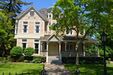
The Rowley House.
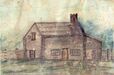
William Riley's cabin.
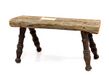
William Riley stool from home floorboards.
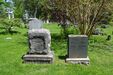
Gravestones of Fanny L. Rowley and mother Fanny Riley-Ross.

Lewis Ross' barber ads.

Mary Ann Riley's upholstery ad.

To the Niagara-on-the-Lake Board of Works from Fanny.


Project origins
- More soon.
In 2026 it was announced that Doug Ford would support the Niagra-on-the-Lake region with one billion dollars to help grow tourism. Thoughtfully inspired Michael convinced his ex-wife Emma to write a book about one of their favourite places, The Rowley House.
- Emma Odrach - researcher, writer, published author
- Jason Carswell - commercial animator, art director, filmmaker, illustrator, co-writer
- Michael Mychaluk - public relations representative
- Bruno Romanzin - narrator voice
See also
References
- More soon.
- More soon
- SupWikipedia template
- Pages using the 'SupWikipedia' template
- Canada
- Canadian history
- Communications
- Development
- Documentaries
- Entertainment
- Fanny
- Freedom
- Historical videos
- History
- Niagara Falls
- Niagara-on-the-Lake
- Ontario
- Ontario history
- Pitches
- Projects
- Projects of Emma Odrach
- Projects of Jason Carswell
- Reference
- Short videos
- Shorts
- Video shorts
- Videos